


Stock Market Maestros: My takeaways from Lee Freeman-Shor's and Clare Flynn Levy's new book

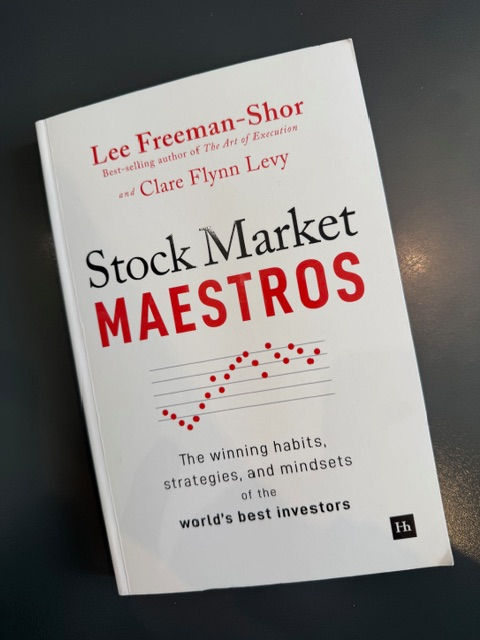
The book follows eleven managers whom the authors rate as Maestros.
They have achieved Maestro status because they have a high Behavioural Alpha Score and a high Payoff Ratio. They also measured Hit Rate. This is the percentage of stock picks that actually make money. As readers of The Art of Execution know, this has little bearing on investment success. The average investor in The Art of Execution has a hit rate of 49%. What distinguishes a winning investor from a losing investor is what they subsequently do. Do they cut losers and let their winners run, or the opposite? Are they assassins or rabbits?
The Behavioural Alpha Score is a proprietary scoring system based on an investor's skill in each of seven critical decision types:
Picking stocks
Sizing the position
Timing of entry
Scaling in
Size adjusting
Scaling out
Exit timing
I have no idea what my score is. It would be interesting to know.
Hit Rate
The average Hit Rate of the eleven investors featured in the book is 51.5%, with a range from 43 to 57.
My score over the last 14 years (it's all on the website) is 58.7%. It's nice to know I can pick stocks a bit better than throwing a dart at a board!
Payoff Ratio
The Payoff Ratio is "what separates the best executors from the rest. It measures how much a manager gains when they're right compared to how much they lose when they're wrong. A payoff ratio of over 100% means their winning ideas (or decisions) more than make up for their losers, and is typically the result of a disciplined approach to running winners and cutting losses."
The average of the eleven investors is 202.5%. The range is 128% up to 288%. The median is 182%
My ratio over the fourteen years is 205%.
Overall, I'm pleased to see how I stack up against the Maestros on the hit rate and payoff ratio. However, I do think there are areas where I can improve. I'd like to get my Payoff Ratio up towards the top of the pack. That requires better execution. The one area where I think I can do better is cutting my losses. Must do it quicker.
A couple of things from the book might help me.
Nearly all of the investors said one should never add to a losing position. "Avoid adding to losing positions to prevent minor mistakes from becoming big ones". I am guilty of that. Sometimes it works, sometimes it doesn't. From now on, I will desist. Also, adding to a losing position makes it even more difficult, psychologically, to cut later.
I will also implement the 1.0% capital loss rule.
The table below shows my biggest losers. All were more than 1.0% of the total capital. (None are currently in the Portfolio). The ones at the top of the list were three or four per cent of the portfolio value (the portfolio was much smaller then).

For balance, here are the largest monetary winners: Six are currently in the Portfolio (run your winners!)

Other pointers:
Look for smoke: when the evidence doesn't align with management's narrative, it's time to get out.
When a company misses earnings, get out, even if the share price goes up
Be humble and acknowledge one's mistakes quickly
Cut quickly if the thesis breaks
Use systematic tools, such as lines on charts, relative lows, moving averages, etc., to take the emotion out of it.
Cut losers fast if momentum turns negative
When he's on a losing streak, James reduces the number of positions and focuses the portfolio on names with the strongest risk/reward profiles.
15% drop triggers an investigation. Accepting that half your ideas are likely to fail makes one less attached to any one of them.
You shouldn't let intuition drive the process, but you shouldn't ignore it either.
.


Great article John. Some key lessons to learn there.